By Iris Epstein RDN, CEDS, ARISE Interventionist
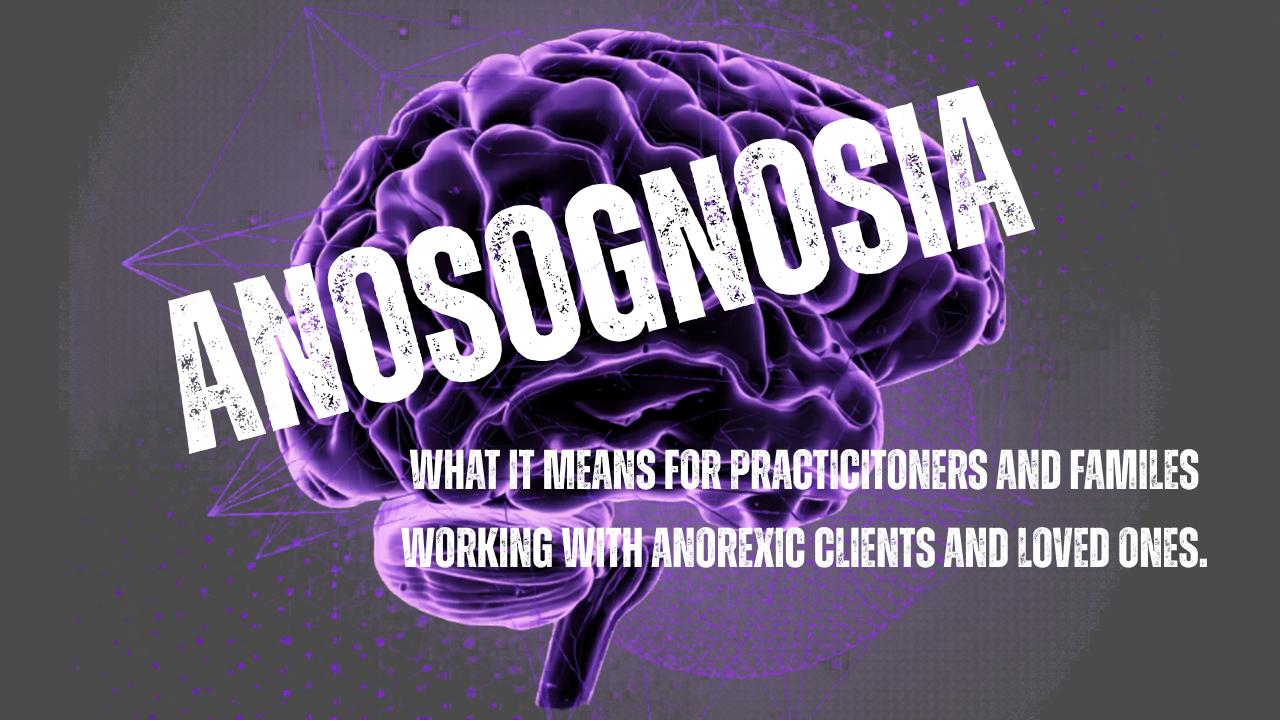
One of the most frustrating and heartbreaking realities I encounter in my work with individuals struggling with anorexia nervosa is this: the very brain that is starving is the same brain being asked to recognize the starvation. This is not denial. This is not stubbornness. This is anosognosia — and understanding it may be the single most important shift a family, clinician, or treatment team can make when trying to help someone with a severe eating disorder.
What Is Anosognosia?
The word comes from the Greek: nosos (disease) and gnosis (knowledge). Anosognosia literally means “without knowledge of disease.” Originally identified in stroke and traumatic brain injury patients who had no awareness of their own paralysis, the concept has become increasingly recognized as a critical factor in psychiatric and medical illnesses — including anorexia nervosa.
Anosognosia is not a psychological defense mechanism. It is a neurobiological phenomenon. When someone has anosognosia, the brain is neurologically impaired in its ability to accurately perceive its own condition. Brain imaging research has shown that malnutrition directly affects the prefrontal cortex — the region responsible for self-reflection, insight, and the ability to accurately assess one’s own physical and emotional state. Put simply, severe restriction physically damages the very part of the brain needed to recognize that something is wrong.
This is why logic, persuasion, and even showing someone their lab results or medical records so often fails. You are not dealing with someone who won’t see — you are dealing with someone who neurologically can’t see, at least not consistently or completely.
Anosognosia and Anorexia Nervosa
Anorexia nervosa has the highest mortality rate of any psychiatric illness. Yet individuals with anorexia are frequently the last to seek treatment — and when they do enter care, dropout rates are high. Anosognosia is a primary driver of both realities.
In anorexia, lack of illness awareness shows up in predictable and painful ways. A patient at a dangerously low weight will look in the mirror and see someone who is “fine” or even “still too large.” They will report feeling energetic when they are medically compromised. They will describe their eating patterns as healthy, balanced, or even generous. They are not lying. Their perception, filtered through a malnourished brain, is genuinely giving them this information.
This is why motivational interviewing and readiness-based treatment models — while valuable in many contexts — have significant limitations with severe anorexia. You cannot motivate someone toward recovery from an illness they do not believe they have.
The Ego-Syntonic Dimension
Anosognosia in anorexia is made more complex by the ego-syntonic nature of the illness. An ego-syntonic condition is one that aligns with a person’s self-image, values, and identity. In anorexia, the behaviors and beliefs surrounding food restriction rarely feel foreign or distressing to the individual — they feel right. They feel like self-discipline, control, achievement, identity.
This is the double bind families and clinicians face: not only does the person lack neurological awareness of the illness, but the illness itself feels like a treasured part of who they are. Asking someone with anorexia to give up restriction can feel, to them, like being asked to give up their personality, their coping, their very sense of self. The ego-syntonic quality of anorexia fuses with the impaired insight of anosognosia, creating a powerful barrier that cannot be reasoned away.
This is why the language we use matters. Confrontation typically backfires. Collaboration — wherever it is possible — tends to open more doors. And when collaboration is not possible because insight is too severely impaired, families must be empowered to act.
What Families Can Do When Insight Is Gone: From ARISE Intervention to Guardianship
When a loved one with anorexia has significant anosognosia, waiting for them to “hit bottom” or “want help” is not a neutral act. It is a dangerous one. Families need a roadmap.
The ARISE Intervention Model is a compassionate, non-confrontational approach that brings together a network of caring individuals — family, friends, colleagues — guided by a trained interventionist. Unlike older, surprise-based confrontational models, ARISE invites the individual into the process with dignity and love. Even in the presence of anosognosia, many individuals will accept help when approached by their people in a structured, non-shaming way. The goal is to lower defensiveness and present a united, loving path toward care.
When someone is so medically or psychiatrically compromised that they cannot safely make decisions for themselves, and they are refusing life-saving treatment, families may need to pursue legal guardianship or conservatorship. This is a profound and difficult step — but it can be a life-saving one.
The process typically begins with consulting a family law or elder/disability law attorney who has experience with medical guardianship. A physician or psychiatrist will need to document that the individual lacks the capacity to make informed medical decisions due to the severity of their illness. In many states, emergency temporary guardianship can be obtained relatively quickly when there is documented medical risk.
Guardianship is not about removing someone’s dignity — it is about keeping them alive long enough for nutrition restoration to allow the brain to begin healing, at which point insight often improves significantly. Families who have walked this path frequently describe it as the hardest thing they ever did, and also as what saved their loved one’s life.
If you are a family navigating this, you do not have to do it alone. An ARISE interventionist can help coordinate the clinical, relational, and at times legal aspects of getting your loved one the care they need — even when they cannot yet ask for it themselves.
The path to recovery from anorexia begins with the people who love someone fighting hard enough — and smart enough — to meet the illness where it actually is.
For more information call the Nutrition Improvement Center (NIC) at 845-362-1300 or email us at ad***@***rd.com.